
Water Quality
Patterns we keep finding in San Fernando Valley tap water across 2,000+ families served: hardness, chromium-6, chloramine swings, post-wildfire VOCs, lead service lines, and which fix matches which symptom.
Across 2,000+ families served in the San Fernando Valley since 2022, the same five water issues come up on almost every in-home test: hardness of 15 to 25 grains per gallon, chromium-6 levels above California public health goals, chloramine swings tied to LADWP source blending, post-wildfire taste and VOC complaints, and lead-service-line risk in pre-1986 housing. Here is what the pattern looks like, and which fix matches which symptom.
Want your own SFV tap tested?
UpTown Cares has served 2,000+ families across Southern California since 2022, in partnership with the Peggy Beatrice Foundation. Every install is backed by $2M liability insurance and a lifetime warranty. 0% APR financing available.
When you have stood in 2,000+ Valley kitchens, sink shut-offs in hand, the questions stop being random. The same symptoms turn up in Northridge that turn up in Studio City. The same scale ring shows up under faucets in Burbank that shows up in Sherman Oaks. Different zip codes, different lot sizes, same underlying water. After four years working with families across the San Fernando Valley as a proud partner of the Peggy Beatrice Foundation, the patterns are not subtle. Here is what we keep finding when the test strips and the lab kits come out, and what tends to actually fix each one.
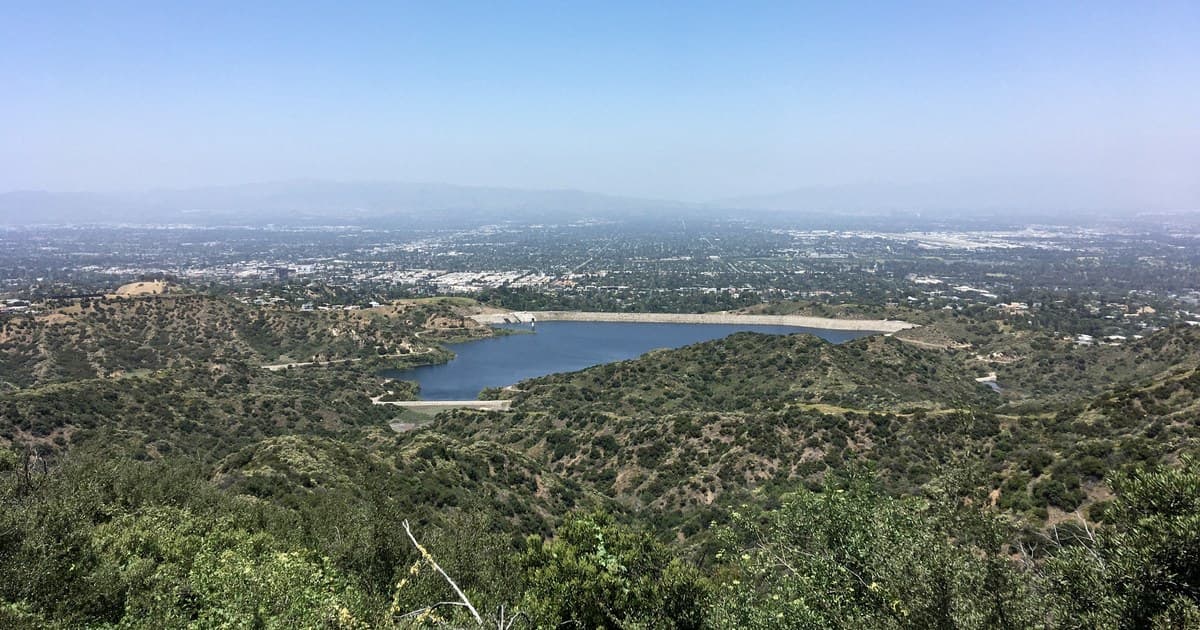
LADWP draws Valley water from three sources, and the blend ratio shifts month to month. The Los Angeles Aqueduct from Owens Valley delivers snowmelt with relatively low total dissolved solids. The Metropolitan Water District imports Colorado River and State Water Project supply, which is harder and higher in TDS. Local groundwater from the SFV basin closes the gap and is treated at the LADWP Tujunga and North Hollywood wellfields. The annual LADWP Drinking Water Quality Report publishes the exact blend percentages and contaminant levels for each pressure zone.
That source-blending matters because what hits your faucet in Encino on a Tuesday in February is not chemically identical to what hits it on a Friday in August. Hardness moves. Chlorine and chloramine residuals move. Disinfection byproducts move. We see this on the test strips at the curb, and our SFV water quality overview shows the seasonal swing in numbers.
For context on California's regulatory framework, the California State Water Resources Control Board, Division of Drinking Water sets enforceable Maximum Contaminant Levels (MCLs) and Public Health Goals (PHGs). Several PHGs in California are stricter than federal EPA limits, which is why local conversations diverge from the national talking points.
The single most consistent finding across 2,000+ families is hardness. Across the Valley, the typical reading we record is 15 to 25 grains per gallon, with the higher end clustering in neighborhoods drawing more groundwater (Sun Valley, Pacoima, parts of North Hollywood) and the lower end in zones tilted toward Owens Valley aqueduct supply. Anything above 10 gpg is classified as very hard by the USGS hardness scale.
The visible symptoms are predictable: white spots on shower glass within a day of cleaning, a chalky ring inside the kettle, stiff laundry, soap that will not lather, and water heater efficiency that drops 25 percent or more after three to five years of scale buildup. The white spots and scale diagnostic walks through the rapid-scan symptom list, and the hardness-by-zip-code reference gives the typical range per neighborhood.
The fix is either a salt-based softener or a TAC (template-assisted crystallization) conditioner, depending on your sodium constraints and whether you have a softening waiver from an HOA. Both connect at the main line. See our softener service page for the system options we install in the Valley.
Hexavalent chromium (Cr-6) is a documented contaminant in the San Fernando Valley groundwater basin. UCLA and USC research, summarized in California State Water Board enforcement actions, traces a significant share of Cr-6 in SFV groundwater to mid-century aerospace and industrial activity along the Burbank, Glendale, and North Hollywood corridors. The California PHG for Cr-6 is 0.02 micrograms per liter, while the enforceable state MCL adopted in 2024 is 10 micrograms per liter (see the State Water Board Cr-6 regulation page).
LADWP treats affected wells before delivery, and most pressure zones meet the MCL. But the gap between the MCL and the PHG is three orders of magnitude, which is why families with health-sensitive members (pregnancy, young children, immunocompromised adults) often want a treatment step at the home that goes below the legal minimum. Reverse osmosis at the kitchen sink reliably removes Cr-6 to non-detect, as confirmed by EPA treatment data for chromium in drinking water. See our RO service page for the under-sink options we install.
This is the single most common reason a Valley family upgrades from a whole-house carbon system to a whole-house plus point-of-use RO combination. The whole-house handles taste, chlorine, and chloramine. The RO handles Cr-6, lead, nitrate, and PFAS at the drinking and cooking tap.
LADWP uses chloramine (chlorine combined with ammonia) as the primary disinfectant. Residuals in the distribution system typically run 1.5 to 2.5 mg/L, with summer values pushing the high end as water sits longer in storage and pipes. Chloramine is harder to remove than free chlorine and requires catalytic carbon, not standard activated carbon, for effective treatment. The chloramine guide covers the distinction in detail.
Symptoms we hear at the door: pool smell from the tap, especially July through September; itchy skin after long showers; aquarium fish die-offs; bread dough rising poorly. The EPA chloramines guidance confirms the typical residual ranges and treatment options. A whole-house catalytic carbon tank sized at 1.5 cubic feet for a four-person home will handle SFV chloramine for 5 to 7 years before media replacement.
Disinfection byproducts (TTHM and HAA5) form when chlorine reacts with organic matter in the source water. LADWP CCR data shows TTHM running well below the 80 ppb MCL Valley-wide, but values trend up in the late summer source blend. Carbon removes the precursors and the byproducts both.
After the 2024 and 2025 fire seasons, we logged a measurable bump in "taste suddenly off" calls from Sylmar, Granada Hills, Porter Ranch, and the foothill edge of Sherman Oaks. Wildfire impact on municipal water has two pathways. Ash deposition in open reservoirs can raise turbidity and introduce trace organic compounds. Burned plastic service-line components in destroyed parcels can leach VOCs (benzene in particular) into the local distribution segment for weeks after fire suppression.
USGS has documented the second pathway in detail in USGS wildfire and drinking water research, and California's State Water Board has issued post-fire boil-water and do-not-use orders multiple times in the past five years across LA County. None of those orders has hit a still-occupied SFV neighborhood directly, but the perimeter effects (taste, smell) are real and were the dominant reason for new-customer calls in November 2024 and January 2025.
The fix is the same as the chloramine fix at the whole-house level (catalytic carbon) plus an under-sink RO for VOC polishing at the drinking tap. The combination removes the post-fire VOC spike below detection and gives a noticeable taste improvement within hours of commissioning. For the regulatory side, the California water rules 2026 guide covers the changes that came out of the Eaton and Palisades response.
LADWP confirms no lead service lines in the city main system per the 2024 Lead and Copper Rule Revisions inventory. The risk in the Valley is interior plumbing: lead solder on copper joints (legal until the 1986 federal ban), brass fixtures containing lead until the 2014 "lead-free" redefinition, and a handful of pre-war Burbank, Glendale, and Studio City homes with original galvanized supply that can release accumulated lead-bearing sediment after disturbance. The EPA basic information on lead in drinking water confirms that no level of lead exposure is considered safe, especially for children.
What we see on the test kit: most homes test at non-detect after a 30-second cold-water flush, but a meaningful share of pre-1986 SFV homes show first-draw readings between 2 and 8 ppb (the EPA action level is 15 ppb, the California PHG is 0.2 ppb). Children and pregnant household members are the population the PHG is built around.
The fix is point-of-use RO at the kitchen sink and any tap where drinking water is drawn. RO at NSF/ANSI 58 certification removes lead reliably. If first-draw readings are above 10 ppb consistently, we recommend a plumber's-eye review of the supply lines and fixtures. Our water testing service includes the lead test on every initial visit at no extra cost.
This is the table we walk through at the kitchen counter on every in-home test, simplified for self-diagnosis. Pair a symptom on the left with the action on the right, and the linked service page covers the system.
| If you are seeing this | The recommended action |
|---|---|
| White spots on glass, scale in kettle, stiff laundry | Salt-based softener or TAC conditioner. See softener options. |
| Pool smell at the tap, itchy skin after showers | Whole-house catalytic carbon. See whole-house filtration. |
| Concerned about Cr-6, lead, PFAS, or nitrate | Under-sink reverse osmosis (NSF/ANSI 58). See RO systems. |
| Sudden taste change after a regional fire event | Carbon plus RO combination. Book a free retest. |
| Pre-1986 home, young children or pregnancy at home | Free lead-inclusive water test + point-of-use RO. |
| Restaurant, salon, or office on the affected supply | Sized commercial system. See commercial filtration. |
If two or more rows describe your home, the right answer is usually a whole-house plus point-of-use combination, not two separate systems. We walk through the layout during the free in-home visit.
Most SFV families can self-diagnose the first four patterns above using a $20 hardness test strip and their own senses. A handful of conditions call for a professional test or installer review before any DIY purchase.
Every UpTown Cares install in the Valley comes with the same baseline: $2M general liability insurance covering the work zone and the home, a lifetime warranty on the system, 0% APR financing for households that prefer to spread the cost, and a 30-day post-install follow-up to dial in performance. Coverage details are on the warranty page and financing terms are on the financing page.
The work is done by W-2 employees, not subcontracted day labor. Every job is permitted where the city requires (LADBS for LA City, separate departments for Burbank, Glendale, and Calabasas). And every install registers warranty serial numbers on the spot so the lifetime coverage is in our system, not buried in a folder you have to find five years later. Customer feedback across the 2,000+ families is on the reviews page.
The partnership side: UpTown Cares operates in partnership with the Peggy Beatrice Foundation, a 501(c)(3) nonprofit. Information on the partnership is on the about page. UpTown Cares is a separate commercial entity that works with the foundation; we are not the foundation ourselves.
LADWP-delivered tap water meets every federal and California enforceable MCL. "Safe" in the regulatory sense and "what a family with young children, pregnancy, or sensitive immune health may still want to treat" are different conversations. Hardness, chromium-6, and chloramine are the three reasons most Valley families add filtration even when the legal numbers are met.
Across 2,000+ families served, the typical SFV hardness reading is 15 to 25 grains per gallon, which is classified as very hard. The high end tends to cluster in zones with more groundwater blend (Sun Valley, Pacoima, parts of North Hollywood). The low end shows up in areas tilted toward Owens Valley aqueduct supply. A test strip costs about 20 dollars at most hardware stores.
Standard whole-house carbon removes chloramine, taste, and odor but does not reliably remove dissolved chromium-6. The standard approach for Cr-6 in the Valley is point-of-use reverse osmosis at the kitchen sink, paired with whole-house carbon for the rest of the house. RO at NSF/ANSI 58 certification removes Cr-6 to non-detect at the drinking and cooking tap.
System cost depends on home size, configuration, and the specific issues found at testing. We provide a fixed quote at the free in-home visit, so there are no surprises. 0% APR financing is available subject to credit approval and covers the standard product set. The savings calculator shows a typical monthly comparison versus bottled water and water heater wear costs.
UpTown Cares operates in partnership with the Peggy Beatrice Foundation, a 501(c)(3) nonprofit. We are a separate commercial entity that works with the foundation. A share of every install supports the foundation's clean-water mission across underserved Southern California neighborhoods. More on the partnership is on the about page.
A standard whole-house install takes 4 to 7 hours including water shut-off and commissioning. Under-sink RO adds 1 to 2 hours. The install day guide walks through the timeline. Every install carries a lifetime warranty on the system with $2M liability insurance covering the work, per the warranty page.
Free in-home water test, lead included. We bring the test kit, do the math at your kitchen counter, and give you the fixed quote on the spot. 2,000+ Southern California families served since 2022, in partnership with the Peggy Beatrice Foundation.
Related reading: Whole-House Filtration · Water Softeners · Reverse Osmosis · Water Testing · Commercial Systems · SFV Water Quality · Service Areas · Products · Financing · Warranty · Reviews · About UpTown Cares · Contact · Install Day Guide · SFV Hardness by Zip Code · Chloramine Guide · California Water Rules 2026

