
Water Quality
San Fernando Valley tap water runs 15 to 20+ grains per gallon, among the hardest in California. Here is the chemistry behind the white spots on your black car, glass, and faucets, plus what actually stops them.
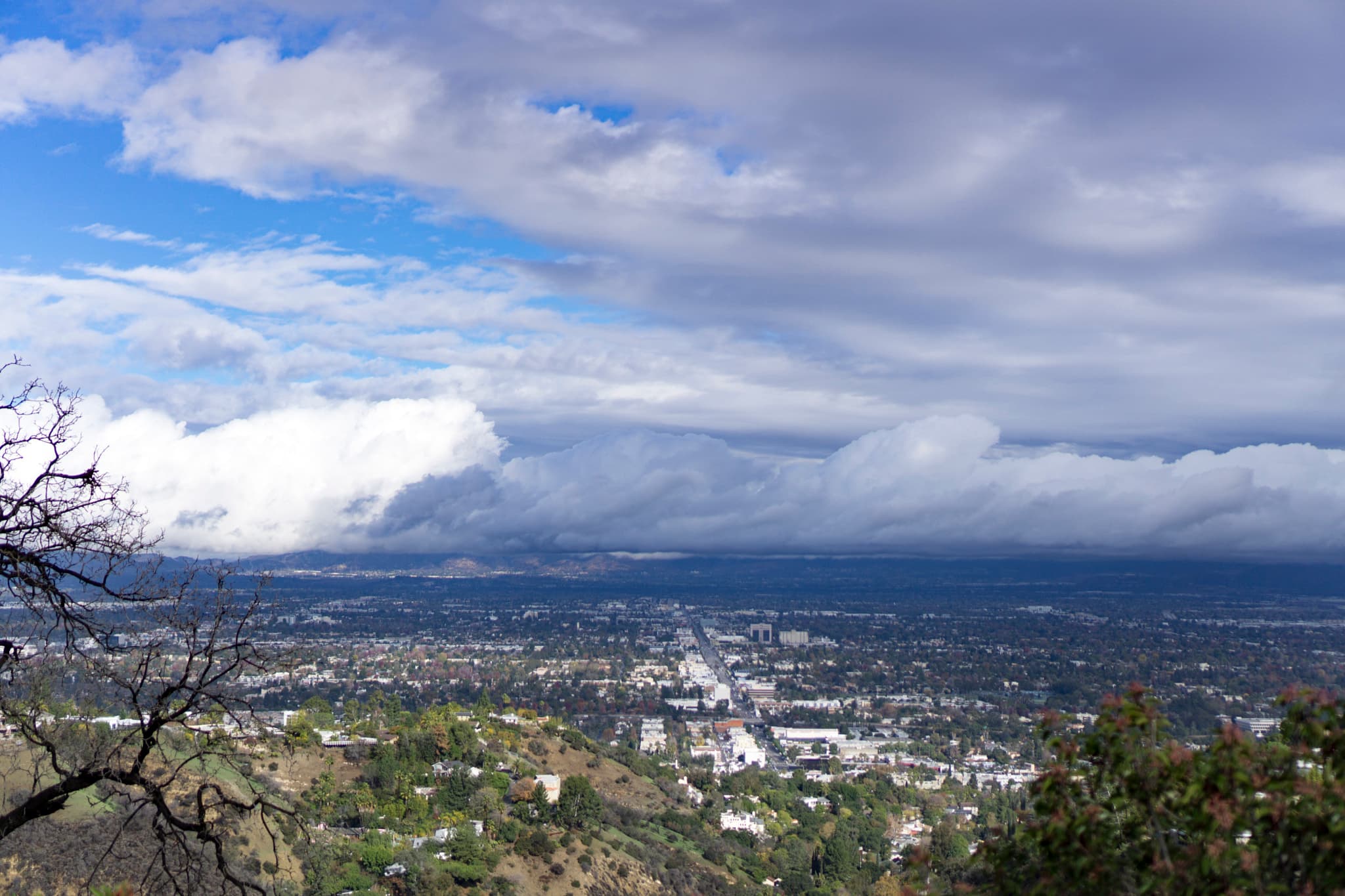
If you have watched your black car develop white spots after a single SFV summer rinse, your local water is the culprit. LADWP delivers some of the hardest water in California, often 15 to 20 grains per gallon. The calcium and silica in it dries to a microscopically rough crust that etches paint, glass, and metal. Here is why and what to do.
Tired of fighting spots on your car, glass, and faucets?
UpTown Cares has installed water treatment for 2,000+ Southern California families since 2022, in partnership with the Peggy Beatrice Foundation. Lifetime warranty, $2M liability insurance, 0% APR financing.
You finish washing the car in the driveway, walk inside to grab a microfiber, and by the time you are back the surface is already drying in patches. By Monday morning the black paint has a constellation of pale rings on it, and no amount of fresh water rinses them away. That is not your soap, your sponge, or your timing. That is San Fernando Valley municipal water doing what it does when it dries on a dark, non-porous surface. The same chemistry is etching your shower glass, hazing your faucets, and ringing your sinks. The good news: once you understand the mineral load in the local supply, the fix is straightforward and the spots stop appearing.
Water hardness is measured in grains per gallon (gpg) or milligrams per liter (mg/L). Across the San Fernando Valley, the typical reading we record at the curb sits between 15 and 20+ grains per gallon, with peaks in zones drawing more groundwater. For reference, the USGS hardness classification calls anything above 10.5 gpg "very hard." The Valley is comfortably in that bracket year-round.
What that number means in practice: every gallon of water you spray on the car contains roughly 250 to 350 milligrams of dissolved calcium and magnesium, plus a measurable load of silica and bicarbonates. When the water evaporates, every milligram of those minerals stays behind on whatever surface the droplet was sitting on. A single ounce of SFV tap water leaves about 8 to 10 milligrams of mineral residue. Multiply that by hundreds of droplets on a hood, and the math gets ugly fast.
If you want the per-neighborhood breakdown, the SFV hardness by zip code diagnostic tracks typical readings across Encino, Studio City, Sherman Oaks, Northridge, Burbank, Glendale, Tarzana, North Hollywood, Sun Valley, Pacoima, and Sylmar. The SFV water quality overview covers the seasonal swings.
LADWP delivers water to the Valley from three primary sources, and the blend ratio shifts seasonally. The Los Angeles Aqueduct carries Owens Valley snowmelt south. The Metropolitan Water District (MWD) imports Colorado River supply and State Water Project supply via the California Aqueduct. Local groundwater from the San Fernando Basin closes the gap and gets treated at LADWP's Tujunga and North Hollywood wellfields.
Each source brings its own mineral profile. Colorado River water is the hardest of the three, picking up calcium and magnesium as it crosses limestone-rich basins in Utah, Arizona, and Nevada. State Water Project supply is moderately hard. Owens Valley aqueduct water is the softest. Local groundwater closes the gap and brings additional dissolved solids from decades of contact with Valley soils. The annual LADWP Drinking Water Quality Report publishes the blend percentages by pressure zone, and the MWD water quality page covers the imported supply ranges. The practical takeaway: the water hitting your driveway in July is meaningfully harder than the water hitting it in April, which is why the spotting feels worse during summer detail sessions.
A water spot on dark paint is not a stain in the everyday sense. It is a mineral deposit fused to the clear coat. When a droplet of hard water sits on a warm surface, the water evaporates faster than the dissolved solids can run off. As the droplet shrinks, the mineral concentration climbs. By the time the last molecule of water is gone, what remains is a ring of calcium carbonate, magnesium silicates, and amorphous silica.
That ring is rough at a microscopic level. On a black or dark blue car under direct SFV sunlight, the surface temperature of the clear coat can climb above 130 degrees within minutes. At those temperatures the calcium carbonate physically bonds to the clear coat through electrostatic attraction, and the silica, which is essentially powdered glass, begins a slow chemical reaction with the clear coat itself, etching a shallow pit into the surface. Once that pit forms, no amount of plain-water rinsing will dissolve it.
This is the same chemistry behind shower glass haze and faucet limescale. The USGS National Field Manual on water chemistry documents the dissolution behavior of these minerals. Once they are out of solution and onto a hot surface, they are not coming back off with a hose.
The instinct is right: wash the car, rinse the spots away. The problem is that the rinse water is the same water that left the spots in the first place. Every fresh pass adds new minerals on top of the old ones. A standard SFV tap-and-chamois wash leaves behind a thin uniform film of dissolved solids that builds layer by layer over months.
Commercial spot-removing products are mildly acidic and dissolve the calcium carbonate component. They work on fresh spots, not on weeks-old spots that have started to pit the paint, and they cannot be used aggressively without stripping wax. Clay-bar treatment lifts surface contamination but cannot reverse silica etching. Polishing compounds level very shallow etching, but the deeper the pit, the more clear coat you remove. The only real fix that does not slowly destroy the paint is removing the minerals before the water touches the surface. That is what a soft-water rinse system does, and it is the same equipment family that solves the shower glass, the faucets, and every other hard-water symptom in the home.
Step inside the house and the symptoms reappear in a different vocabulary. The shower glass that fogged with white residue hours after the last squeegee. The slate countertop that picks up rings under any glass set down with condensation. The chrome faucet that turns chalky white at the base of the spout. The dishwasher that leaves spots on glassware even with rinse aid. The kettle with the white crust on the heating element. The water heater whose recovery time has been getting longer every year.
Every one of those is the same chemistry as the car spots. Calcium carbonate is plating onto every surface that hot or evaporating water touches. Silica is etching the glass and the metal. The SFV white spots and scale diagnostic walks through a rapid-scan symptom checklist; if you nod at three or more, you are looking at hardness above 15 gpg. Scale buildup is not only cosmetic. Inside a tankless water heater, even a thin layer of scale cuts heat transfer efficiency and shortens unit life. The US Department of Energy water heating guidance documents the efficiency loss from scale accumulation.
There are two practical paths to stopping the spots, depending on whether you want to solve only the car-wash problem or the entire household at once.
Path one is a dedicated soft-water rinse system at the hose bib you use for the car. These are point-of-use deionization or softening cartridges that plug inline between the spigot and the hose. They remove minerals from the rinse water for that one connection, so the final rinse on the car dries spot-free. They need cartridge replacement every few hundred gallons and do nothing for the rest of the house.
Path two is whole-home softening at the main line. A salt-based softener exchanges calcium and magnesium ions for sodium, so every drop in the house, including the outdoor spigots, comes out soft. This simultaneously fixes the car, the shower glass, the faucets, the dishwasher, the water heater, and the laundry. For SFV households at 15 to 20+ gpg, this is the option that pays itself back through extended appliance life. Our water softener service page covers the system options, and the whole-house filtration page covers the combined carbon plus softener stacks most Valley families end up with.
If sodium load is a concern (HOA brine restrictions, septic systems, low-sodium dietary needs), a template-assisted crystallization (TAC) conditioner is the salt-free alternative. TAC does not remove minerals but converts them to a crystalline form that will not adhere to surfaces. Effective on shower glass and appliances. The under-sink RO service page covers the kitchen-tap polishing step families add for drinking water.
This is the condition-to-action map we walk through with Valley homeowners during the in-home consultation. Pair your situation on the left with the recommended path on the right.
| Your situation | Recommended action |
|---|---|
| I only care about the car. Apartment or rental, no whole-home access. | Inline deionization cartridge at the hose bib. Spot-free rinse for that connection only. |
| I own the home. Car, glass, faucets, appliances all spotting. | Whole-home salt-based softener. See softener options. |
| HOA prohibits brine discharge or I am on septic. | TAC (template-assisted crystallization) conditioner. Salt-free, no brine discharge. |
| Hardness plus chloramine smell at the shower. | Catalytic carbon plus softener combination. See whole-house filtration. |
| Sensitive household (kids, pregnancy, immunocompromised). | Whole-house stack plus under-sink reverse osmosis at the kitchen tap. |
| Mobile detailing business or auto shop. | Sized commercial softener at the supply line. See commercial filtration. |
If two or more rows describe you, the right answer is usually the whole-home path because it solves every spotting symptom in the building at once. We confirm the right size during the free in-home walkthrough. The install day guide covers what the work actually looks like.
Most SFV homes are straightforward installs. A few situations need a real site visit and possibly a custom design before any equipment shows up.
Our water testing service includes a hardness reading and a full mineral panel on every initial visit at no extra cost. You will know your exact gpg number before any conversation about systems.
UpTown Cares is a for-profit water treatment installer serving the San Fernando Valley and Southern California. We operate in partnership with the Peggy Beatrice Foundation, a separate 501(c)(3) nonprofit. UpTown Cares purchases are commercial transactions and are not tax-deductible. Donations made directly to the foundation are tax-deductible through the foundation. Details are on our about page.
Two reasons. First, dark paint absorbs more solar heat, so the surface dries faster and concentrates the mineral deposit. Second, dark paint shows the white mineral residue with maximum contrast. Light-colored cars accumulate the same deposit, but it is much harder to see until you wipe a finger across the hood. On every paint color, the underlying chemistry is the same SFV hardness.
Not directly. A DI or soft-water rinse prevents new spots from forming and slows the buildup, but old spots that have started to etch the clear coat are still in the paint. For existing damage you need a clay bar plus a light polish to lift the surface deposit, and an acidic spot remover if the spots are calcium-only and recent. The combination of soft-water rinse going forward and one round of remediation now is what most Valley car owners do.
Yes, among the harder municipal supplies in the metro. LADWP's Valley delivery typically tests at 15 to 20+ grains per gallon. By contrast, the Las Virgenes Municipal Water District serving Calabasas and Agoura Hills draws purely from MWD imports and tends to run slightly lower. Long Beach and parts of the South Bay run softer because of different blend ratios. The USGS map of US water hardness puts Southern California in the very-hard band overall.
Yes, in a good way. Soft water lets car-wash soap lather correctly with less product, and the rinse runs cleaner without redepositing minerals. You will use less soap, finish faster, and get a noticeably better dry-down result. The same effect shows up in laundry and the shower.
Potentially, if you use a salt-based softener and water salt-sensitive plants long-term. Most Valley installs include a dedicated bypass for the irrigation line and the exterior hose bibs used for landscaping, leaving outdoor watering on hard water and only softening the indoor plumbing. We size and route that during the install walkthrough. TAC conditioners do not add sodium and do not have this concern.
The tank and valve head are typically 10 to 15 years with normal use. Resin lasts 10 to 15 years on SFV water. Salt is added every 1 to 2 months depending on household demand. With routine attention, the system is a 15+ year investment that pays itself back through extended appliance life. Our installs include a 30-day post-install check and lifetime warranty coverage on the core components.
Free in-home water test and walkthrough. We measure your tap hardness, locate your main shut-off, and show you the system options that fit your home. 2,000+ Southern California families served since 2022.
Related reading: Water Softeners · Whole-House Filtration · Reverse Osmosis · Water Testing · Maintenance · Commercial Systems · SFV Water Quality · Service Areas · Financing · Warranty · All FAQs · Savings Calculator · Contact · About UpTown Cares · SFV Hardness by Zip Code · White Spots and Scale Diagnostic · Install Day Guide

